What Causes Black Mold to Grow in Homes?
Mold needs moisture, a food source, and suitable environmental conditions to grow. In Union County homes, water intrusion and excess humidity are common factors behind indoor mold problems. A small plumbing leak or condensation issue can create enough moisture for mold to develop if it is not addressed promptly.
Common causes include:
- Plumbing and pipe leaks
- Roof leaks
- Basement water intrusion
- Flooding
- High indoor humidity
- Poor bathroom ventilation
- Condensation around windows and pipes
- Damp crawl spaces
- Water-damaged drywall or insulation
Signs You May Have a Black Mold Problem
Visible dark spots are an obvious warning sign, but mold is not always easy to see. Sometimes it develops behind walls, underneath flooring, around insulation, or in other concealed areas where moisture has accumulated.
Watch for these potential signs:
- Musty or earthy odors
- Dark patches on walls or ceilings
- Mold returning after cleaning
- Peeling paint or wallpaper
- Water stains or discoloration
- Damp drywall
- Persistent condensation
- Visible moisture around plumbing
- Mold growth near HVAC components
- Unexplained moisture in basements or crawl spaces
DIY Mold Cleanup vs. Professional Remediation
Not every mold situation requires a professional remediation company. The size and complexity of the affected area are important factors when deciding how to proceed.
| Mold Situation | Recommended Approach |
|---|---|
| Small, isolated area | Homeowners may be able to clean it safely |
| Large area of mold growth | Professional assessment recommended |
| Recurring mold | Professional inspection recommended |
| Hidden mold suspected | Professional remediation recommended |
| Extensive water damage | Professional help recommended |
| Sewage-related contamination | Professional remediation strongly recommended |
| Suspected HVAC contamination | Professional evaluation recommended |
When Is Professional Black Mold Remediation Necessary?
Professional black mold remediation in Union County, NJ becomes especially important when mold covers a large area, repeatedly returns, or has spread into materials that are difficult to access or clean. Extensive mold growth can indicate that the underlying moisture problem is more significant than it initially appears. Simply wiping the visible surface may leave contamination behind. Professional assistance is also valuable when mold is suspected behind drywall, under flooring, inside insulation, or around structural components. Attempting to remove these materials without proper precautions can disturb mold growth and spread contaminated particles into other areas of the home. Another important situation involves HVAC systems. If mold contamination is suspected inside heating or cooling equipment or ductwork, professional evaluation is advisable because air circulation can potentially distribute contaminants throughout the property.
What Happens During Professional Mold Remediation?
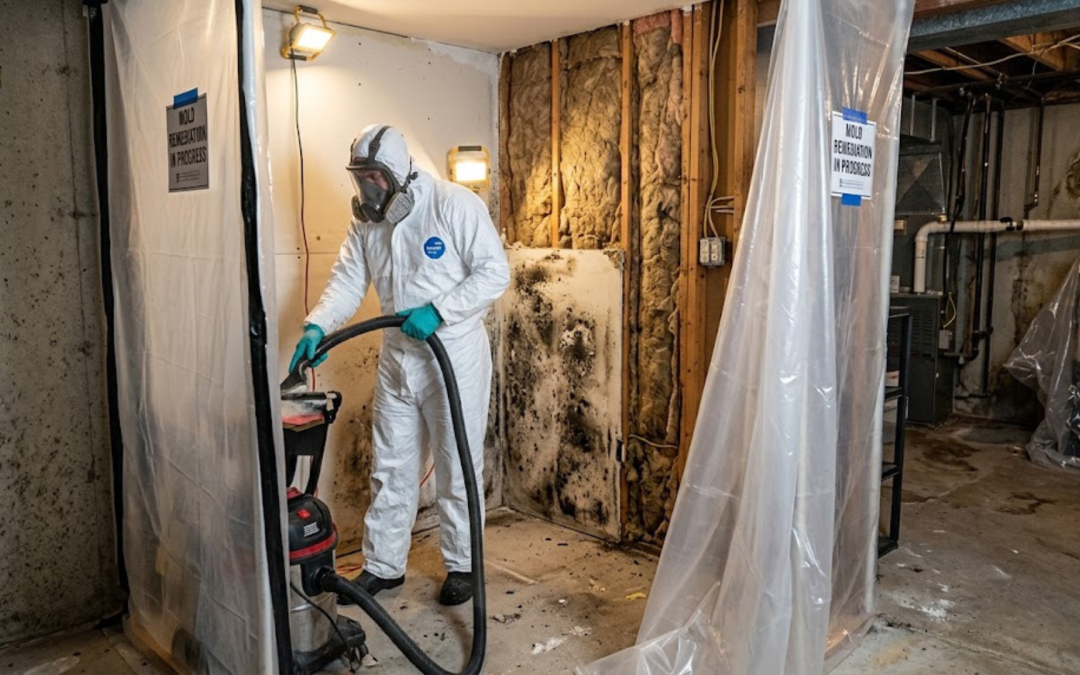
Professional mold removal is more than spraying a chemical on a contaminated surface. A proper remediation process focuses on controlling the contamination while addressing the moisture source that caused it.
A typical process may include:
1. Inspection and assessment: The affected areas are evaluated to determine the extent of the problem.
2. Moisture investigation: Professionals identify leaks, humidity problems, condensation, or other sources of water.
3. Containment: Appropriate measures may be used to prevent contamination from spreading to unaffected areas.
4. Removal or cleaning: Contaminated porous materials may need to be removed, while salvageable surfaces can be appropriately cleaned.
5. Drying and moisture control: Affected areas are thoroughly dried and the source of excess moisture is corrected.
6. Final evaluation: The area is reviewed to ensure the remediation work has been properly completed.
Why Simply Killing Mold Is Not Enough
One of the biggest mistakes homeowners make is treating mold as merely a surface-stain problem. For instance, spraying a cleaning product on visible mold or painting over the affected area does not necessarily eliminate the contamination. In fact, mold can grow beneath surfaces and inside porous materials, making it difficult to detect and remove completely. Moreover, even when visible mold is no longer apparent, the underlying moisture problem may still exist. Therefore, if a leaking pipe, roof issue, or excessive humidity is not properly addressed, mold can quickly return. Ultimately, effective mold removal services should address both the existing contamination and the moisture conditions that allow mold to grow in the first place.
How to Choose a Mold Remediation Company in Union County
Choosing the right professional is an important part of resolving a serious mold problem. Homeowners should look beyond a company simply advertising “mold removal.”
Consider whether the company:
- Has experience with residential mold remediation
- Provides a clear assessment of the affected area
- Explains the source of the moisture problem
- Uses appropriate containment procedures
- Has suitable professional equipment
- Provides a detailed remediation plan
- Offers transparent pricing
- Has positive customer reviews and references
- Clearly explains what materials may need to be removed
How to Prevent Black Mold From Returning
Black mold can become a serious concern when moisture problems are left unresolved inside a home. For example, basements, bathrooms, attics, crawl spaces, and areas affected by leaks can provide ideal conditions for mold growth. However, while small areas of mold may sometimes be cleaned safely by homeowners, larger or recurring problems often require professional attention. Therefore, understanding when professional black mold removal in Union County is necessary can help homeowners protect their property, address underlying moisture issues, and prevent the problem from becoming more extensive.
When Should You Call a Mold Remediation Professional?
Professional help is generally worth considering when mold growth is extensive, keeps returning, is hidden within building materials, follows significant water damage, or may involve an HVAC system. In such cases, the problem can be more complicated than ordinary household cleaning and may require specialized equipment and proper remediation techniques. Therefore, if you suspect black mold in your Union County home, it is important not to wait for the problem to spread. Instead, a professional assessment can help identify the source of moisture, determine the extent of contamination, and establish the safest and most effective approach for remediation.