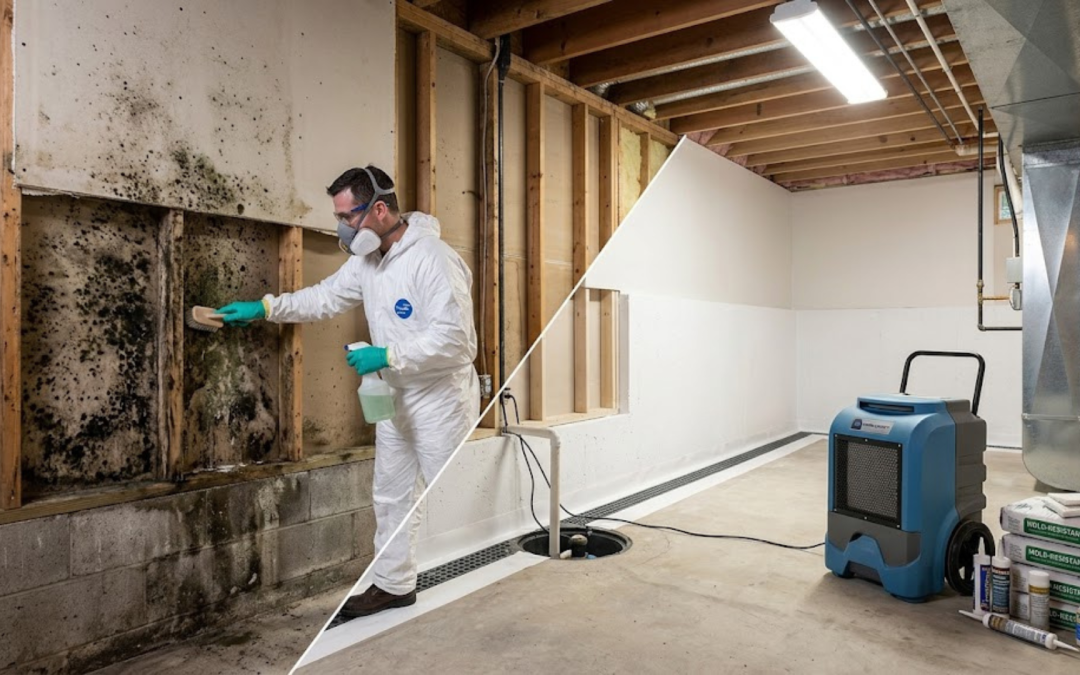
A damp, musty basement is an all-too-familiar reality for homeowners across Union County, New Jersey. From historic colonials in Westfield and Summit to split-levels in Cranford, Clark, and Union Township, local properties face constant subterranean moisture pressure. Discovering dark patches along your baseboards or joists is concerning enough, but the true frustration begins when you scrub the area clean, only to watch fuzzy green and black colonies reappear weeks later. Permanent mold elimination requires more than a weekend bleach treatment. It demands an understanding of regional hydrogeology, proper containment protocols, and targeted moisture interruption.
Why Union County Basements Are Prime Targets for Mold
Union County’s geographic footprint creates ideal conditions for microbial growth. Positioned over dense clay soils and within the drainage basins of the Rahway and Elizabeth Rivers, the regional water table sits persistently high. During hot, humid Mid-Atlantic summers, outdoor air carrying 70% to 80% relative humidity enters cooler sub-grade basements. As that warm air hits cold concrete masonry, condensation forms instantly on surfaces.
Furthermore, many local properties feature century-old fieldstone, unreinforced brick, or porous cinder block foundations. These materials draw moisture from saturated soil like a sponge through capillary action. Combined with seasonal storm surges and flash flooding, the area beneath your ground floor functions as a natural incubator for fungal spores.
Surface Cleaning vs. Full Mold Remediation
The most common mistake property owners make is reaching for a gallon of household bleach. While bleach alters the pigmentation of mold on non-porous surfaces—giving the illusion of a clean wall—it cannot penetrate porous concrete, wood, or drywall.
[Household Bleach] ──> Kills surface spores ──> Water base absorbs deep ──> Feeds root mycelium
[Enzyme Fungicide]  ──> Penetrates substrate ──> Neutralizes root system ──> Prevents regrowth
Bleach contains roughly 90% water. When applied to cinder block or timber framing, the chlorine evaporates rapidly on the surface while the water soaks deep into the substrate, directly feeding the mold’s vegetative root system (hyphae). Professional remediation relies on EPA-registered botanical or quaternary ammonium antimicrobials paired with physical removal, eradicating the organism at its root rather than simply bleaching its shell.
Warning Signs: Catching Infestations Early
Mold rarely appears overnight without warning. Monitoring your lower level for early indicators prevents minor dampness from evolving into whole-home structural damage:
-
Persistent Earthy Odors: A continuous smell reminiscent of wet soil or rotting leaves circulating through first-floor return vents.
-
Warped or Stained Baseboards: Baseboards and lower framing studs pulling away from foundation footings or turning soft to the touch.
-
Cold-Season Condensation: Persistent sweating on exposed copper plumbing runs, foundation walls, or metal support columns.
-
Aggravated Respiratory Issues: Unexplained coughing, throat irritation, sinus pressure, or eye irritation that clears when leaving the home.
-
Discolored Joist Cavities: White powdery dusting or dark speckling on overhead floor joists beneath kitchens and bathrooms.
Mold vs. Efflorescence: Identifying the Problem
Before undertaking cleanup, you must verify whether you are dealing with living organic growth or harmless mineral buildup. Concrete walls subjected to hydrostatic pressure frequently produce white, crystalline structures known as efflorescence.
| Diagnostic Metric | Subterranean Mold Colony | Foundation Efflorescence |
| Origin | Living, reproducing fungal organism | Inorganic mineral salt deposits |
| Visual Texture | Velvety, fuzzy, slimy, or soot-like | Chalky, dry, crunchy, or crystalline |
| Common Hues | Black, olive green, dark brown, dirty white | Bright, stark white to light grey |
| Reaction to Water | Smears, retains color, does not dissolve | Dissolves instantly upon contact |
| Combustion Test | Singes and smells organic when torched | Does not burn or give off odor |
| Impact on Health | Releases mycotoxins, allergens, and spores | Biologically inert; zero health risk |
| Primary Danger | Wood rot and respiratory illness | Serves as early warning of moisture leaks |
Professional Remediation: Step-by-Step
Certified contractors follow strict guidelines set by the Institute of Inspection, Cleaning and Restoration Certification (IICRC S520 Standard). When dealing with widespread basement growth, the process involves four controlled phases:
-
Containment Isolation: Technicians seal doorways, stairwells, and HVAC pathways with 6-mil poly sheeting and establish continuous negative air pressure using industrial air scrubbers equipped with HEPA filters. This prevents airborne spores from cross-contaminating living spaces upstairs.
-
Moisture Diagnostics: Technicians map moisture migration patterns behind finished drywall and below concrete slabs using non-destructive thermal imaging cameras and surface pin meters.
-
Physical Media Extraction: Contaminated porous materials (insulation, unsealed drywall, carpeting) are bagged, sealed, and removed. Structural wood and block walls undergo HEPA-vacuuming, wire-brush abrasion, or dry-ice blasting to strip the fungal roots.
-
Antimicrobial Sealing & Clearance Testing: Exposed surfaces receive an application of EPA-registered fungicidal encapsulant to lock out future moisture, followed by calibrated third-party spore-trap air sampling to verify baseline clearance.
Structural Upgrades: Eliminating the Moisture Source
Remediation without moisture management guarantees recurrence. Stopping subterranean intrusion requires controlling ground water before it impacts the perimeter wall:
-
Interior Sub-Slab Drainage: Installing an interior French drain along the foundation footing relieves hydrostatic pressure beneath the concrete slab, channeling rising water straight to a sealed sump basin.
-
Dual-Pump Sump Systems: Basements in low-lying towns like Cranford should utilize an primary submersible cast-iron sump pump backed by an independent, auxiliary 12-volt battery-backup pump to protect against storm outages.
-
Vapor Barrier Encapsulation: Covering crawlspaces or bare floor areas with a puncture-resistant, 20-mil reinforced antimicrobial vapor retarder stops vapor diffusion through concrete pores.
Non-Negotiable Tactics to Stop Mold Regrowth
                  ┌──────────────────────────────────────────────┐
                  │ Keep Indoor Relative Humidity Below 50%     │
                  └──────────────────────┬───────────────────────┘
                                         │
     ┌───────────────────────────────────┼──────────────────────────────────┐
     ▼                                   ▼                                  ▼
[Extend Downspouts 6-10']     [Grade Soil Away from Slab]      [Maintain 4" Air Gaps]
-
Maintain Sub-50% Humidity Continuously: Install a commercial-grade, auto-draining dehumidifier (such as an AprilAire or Santa Fe unit). Avoid small consumer models that shut down once their 2-gallon collection tank fills.
-
Direct Roof Runoff 6 to 10 Feet Away: Clean gutter systems every spring and autumn. Add rigid PVC extensions to downspouts to keep roof runoff from saturating foundation soil.
-
Correct Exterior Grading: Ensure surrounding yard soil slopes downward a minimum of 6 inches over the first 10 feet away from exterior siding.
-
Maintain Interior Air Gaps: Keep storage shelves, workbenches, and stored goods positioned at least 4 inches away from outer foundation walls to promote active airflow.
-
Switch to Non-Cellulose Storage: Eliminate corrugated cardboard boxes, bare wooden crates, and paper sacks. Store keepsakes exclusively inside airtight polyethylene containers elevated off the bare concrete floor.
Final Thoughts on Protecting Your Home
Treating basement mold requires addressing the moisture source rather than merely wiping down visible growth. For properties across Union County, combining certified antimicrobial remediation with targeted exterior drainage and dedicated dehumidification protects both your home’s foundation and indoor air quality.