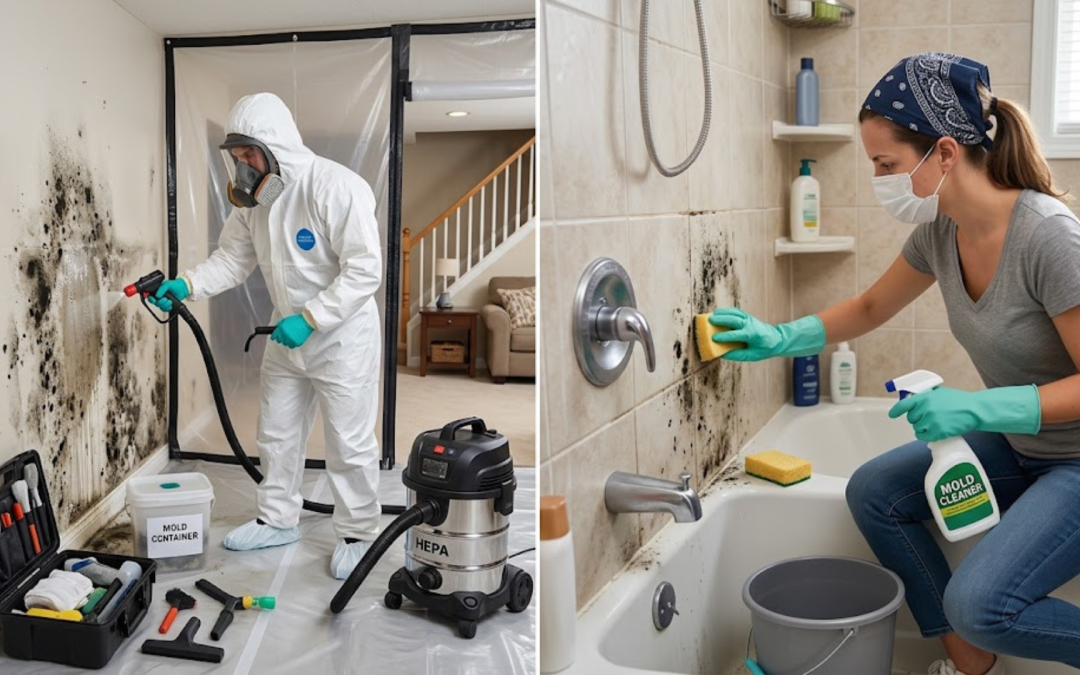
Discovering fungal growth inside your house triggers an immediate sense of urgency. Whether it appears as dark speckling along a basement baseboard or persistent discoloration across an upstairs ceiling, mold represents more than just an unsightly surface blemish. For homeowners throughout Union County, deciding between tackling the problem with a store-bought cleaner or enlisting a licensed remediation contractor involves evaluating structural safety, air quality, long-term costs, and health risks.
Understanding when a weekend cleanup is suitable and when attempting self-remediation invites greater damage is essential for safeguarding your property and family.
The Reality of Mold Growth in Union County Homes
Union County features a rich architectural landscape, from historic colonials in Westfield and Victorian residences in Cranford to mid-century ranches in Clark and bustling multi-family properties in Elizabeth. However, this established housing stock comes with distinct vulnerability to moisture intrusion.
Summers along northern New Jersey corridors bring prolonged high humidity levels that settle directly into below-grade foundations. Older foundations, seasonal freeze-thaw cycles, and aging drainage infrastructures frequently result in basement seepage, slab dampness, and poor attic ventilation. Because fungal spores require only oxygen, an organic food source, and persistent moisture to thrive, Union County residences regularly present the exact environmental conditions necessary for rapid indoor fungal colonization.
What Qualifies as a Safe DIY Mold Cleaning Job?
Not every fungal spot requires a full hazardous-materials team. Minor surface growth that develops under clear, controlled conditions can often be remediated safely by a homeowner using standard protective measures.
To determine if your mold issue falls within safe do-it-yourself parameters, verify that the situation meets each of the following criteria:
-
Surface Area Under 10 Square Feet: The Environmental Protection Agency (EPA) explicitly recommends that self-directed cleanups remain restricted to areas smaller than roughly 3 feet by 3 feet.
-
Strictly Non-Porous Surfaces: Growth must be located exclusively on non-absorbent materials such as glazed ceramic bathroom tile, glass, acrylic shower stalls, stainless steel fixtures, or sealed solid laminates.
-
Isolated, One-Off Moisture Source: The moisture must stem from a known, non-recurring incident—such as standard shower steam, a single localized sink overflow, or high surface humidity—that has already been fully resolved and dried.
-
Absence of HVAC Infiltration: The fungal growth must not be situated inside, adjacent to, or upstream from heating, ventilation, and air conditioning (HVAC) supply or return vents.
-
Low-Risk Health Environment: No occupants within the residence suffer from severe asthma, mold sensitivities, pulmonary conditions, or compromised immune defenses.
Common DIY Mold Removal Mistakes
Well-intentioned homeowners frequently worsen their mold problems by relying on widespread cleaning myths. Attempting to eradicate mold using standard domestic techniques often conceals the issue rather than solving it.
Using Bleach on Porous Materials
By far, the most pervasive DIY misstep is spraying household chlorine bleach directly onto sheetrock, unfinished timber framing, or carpet backing. In reality, household bleach is composed of approximately 90% water. Consequently, when it is applied to porous substrates, the oversized chlorine molecules remain trapped on the exterior plane, whereas the water-based carrier soaks deep into the material itself. While the visible surface stain temporarily vanishes, the underlying moisture ultimately provides fresh hydration to the fungal root network (hyphae). As a direct result, this practice triggers aggressive, rapid regrowth within just a few days.
Skipping Containment and Cross-Contaminating the Living Space
In practice, aggressive scrubbing, dry wiping, or utilizing an ordinary household vacuum cleaner on active mold clusters inevitably dislodges millions of microscopic spores into the surrounding room. Meanwhile, in the absence of negative-pressure isolation barriers, these lightweight spores rapidly become airborne. As a result, they effortlessly travel across room thresholds and drift directly into return ducts. Ultimately, this cycle systematically contaminates previously untouched bedrooms, general living spaces, and upholstered furniture throughout the entire house.
Ignoring the Underlying Moisture Intrusion
Fundamentally, fungus is merely a symptom, whereas excess water remains the true root cause. Therefore, simply wiping down damp walls without first locating the plumbing leak, foundation crack, or gutter overflow virtually guarantees that colonies will promptly re-establish themselves. Consequently, this superficial approach accelerates structural deterioration, allowing hidden decay to quietly advance behind finished surfaces.
Head-to-Head Comparison: DIY Methods vs. Certified Remediation
| Evaluation Factor | DIY Mold Cleaning | Certified Professional Remediation |
| Max Safe Surface Area | Under 10 square feet (localized spots) | Unlimited; full-home structural containment |
| Primary Remediation Chemistry | Vinegar, mild detergents, hydrogen peroxide | EPA-registered botanical antimicrobials & fungicidal sealants |
| Air Filtration Systems | Open windows, standard domestic box fans | Commercial negative air machines & HEPA scrubbers (0.3 microns) |
| Moisture & Spore Detection | Basic visual inspection with flashlight | Infrared thermal imaging, pinless moisture meters & air sampling |
| Porous Substrate Handling | Surface wiping (leaves internal roots alive) | Controlled containment demolition, bagging, and HEPA vacuuming |
| Long-Term Protection | No warranty; high recurrence rate | Post-Remediation Verification (PRV) testing & structural clearance |
When Is Professional Remediation Mandatory in New Jersey?
Certain contamination thresholds demand professional intervention to prevent permanent structural rot and protect indoor air quality. Certified remediation becomes essential when facing:
-
Widespread Coverage: Any fungal outbreak exceeding the EPA’s 10-square-foot threshold demands engineering controls and sealed containment zones.
-
Contaminated Air Ducts and Air Handlers: Spores present inside HVAC supply runs circulate across every room whenever the system cycles on, requiring specialized mechanical cleaning and encapsulation.
-
Category 2 and Category 3 Water Intrusion: Water originating from sump pump backups, sewer main overflows, or exterior surface runoff introduces pathogenic bacteria alongside mold spores, necessitating hazardous waste extraction.
-
Unexplained Musty Odors Behind Walls: Persistent mildew smells without visible signs usually point to hidden growth inside insulation cavities, crawl spaces, or subflooring.
-
Immune-Compromised Household Members: If residents suffer from respiratory illnesses, chronic allergies, or mold sensitivity, self-remediation poses unacceptably high inhalation hazards.
The Professional Remediation Process: What Homeowners Should Expect
Licensed remediation professionals operate under standardized industry protocols, notably the Institute of Inspection, Cleaning and Restoration Certification (IICRC) S520 standard. This systematic approach includes:
-
Comprehensive Assessment and Thermal Mapping: Technicians deploy non-destructive moisture meters and infrared cameras to trace hidden water paths within wall cavities and subflooring.
-
Containment Zone Installation: Crews seal off contaminated spaces using 6-mil polyethylene plastic sheeting and establish negative air pressure to trap loose spores inside the work zone.
-
Continuous HEPA Air Scrubbing: High-capacity air filtration units run continuously, capturing suspended particles down to 0.3 microns at 99.97% efficiency.
-
Controlled Removal of Compromised Porous Materials: Saturated drywall, insulation, and carpeting are systematically excised, sealed into heavy-duty disposal bags, and removed safely.
-
Antimicrobial Treatment and Encapsulation: Structural framing members are scrubbed, HEPA-vacuumed, treated with EPA-registered biocides, and coated with mold-resistant elastomeric sealants.
-
Post-Remediation Verification (PRV): Neutral third-party air quality testing confirms spore levels have returned to normal fungal ecology before containment barriers are taken down.
Hidden Costs: Why DIY Often Becomes the More Expensive Choice
At first glance, spending twenty dollars on household spray seems far more appealing than hiring a certified contractor; however, incomplete remediation inevitably carries substantial financial fallout. In particular, subsurface mold continuously consumes wood cellulose, thereby weakening structural studs, subfloors, and joists from within. Consequently, what begins as a minor framing cleanout can quickly escalate into thousands of dollars in major structural carpentry repairs. Furthermore, real estate transactions throughout Union County frequently stall—or collapse entirely—during home inspections whenever uncertified, superficial cleanup efforts are uncovered. Under these circumstances, prospective buyers routinely demand substantial escrow credits or cancel purchase contracts outright if proper clearance documentation, transferable warranties, and certified laboratory test reports are unavailable.
How to Choose a Vetted Remediation Specialist in Union County
-
Demand IICRC Certification: Verify that the firm employs Applied Microbial Remediation Technicians (AMRT) and Water Damage Restoration Technicians (WRT).
-
Require an Unbiased Assessment: Partner with contractors who operate alongside independent indoor environmental professionals (IEPs) for pre- and post-testing to prevent conflicts of interest.
-
Confirm Specialized Pollution Liability Coverage: Standard contractor liability insurance rarely covers mold contamination claims; verify active environmental and pollution insurance riders.
-
Evaluate Regional Expertise: Select companies thoroughly familiar with Union County architecture, high water tables, and New Jersey building codes.
Long-Term Mold Prevention Strategies for Local Basements & Attics
-
Regulate Basement Humidity: Run commercial-grade, self-draining dehumidifiers to keep relative humidity consistently below 50%.
-
Ensure Unobstructed Attic Airflow: Clear soffit, ridge, and gable vents of insulation blockages to stop condensation buildup along roof rafters.
-
Direct Exterior Downspouts Away: Route downspout extensions and sump discharges at least 6 to 10 feet away from exterior foundation walls.
-
Schedule Regular Plumbing Audits: Inspect crawl space lines, washing machine hookups, and boiler supply valves seasonally for early leaks.
Protecting Your Home’s Structural Integrity and Family Health
Ultimately, balancing DIY maintenance against professional remediation comes down to understanding the clear limits of surface cleaning. On the one hand, wiping down occasional mildew on non-porous bathroom tile is certainly well within the scope of basic domestic upkeep. However, when mold spreads across porous drywall, infiltrates ventilation ducts, or stems from hidden foundation dampness, superficial cleaning merely masks a rapidly compounding crisis. Consequently, partnering with an experienced, certified professional ensures that the root moisture source is permanently neutralized. As a result, the home’s structural envelope is preserved, and your indoor air remains thoroughly safe for years to come.