Humid New Jersey summers and heavy coastal storms test every local home. Consequently, trapped moisture quickly sparks fungal growth behind walls and under floors. Searching for mold removal services in Union County becomes urgent when household cleaners fail to stop dark stains. While minor bathroom mildew only requires basic scrubbing, deep infestations threaten both your property and your health. Therefore, knowing when to hire certified experts protects your family and saves thousands in structural repairs.
Why Union County Homes Are Prone to Hidden Mold Growth
Union County features historic homes and high seasonal humidity. Specifically, older foundations in Westfield, Cranford, and Elizabeth often absorb ground moisture after heavy rainstorms. Furthermore, properties near the Rahway River face elevated water tables throughout spring and autumn. As a result, damp basements and poorly ventilated attics create ideal breeding grounds for airborne spores.
In addition, modern insulation traps indoor humidity inside tightly sealed living spaces. When winter pipes sweat or summer air conditioners leak, water pools inside dark wall cavities. Because homeowners rarely inspect behind drywall, colonies expand silently for months before surface stains appear.
7 Warning Signs You Need Professional Mold Remediation
Recognizing early red flags prevents minor water damage from becoming a major crisis. Watch for these seven indicators that demand immediate professional mold remediation:
-
Persistent Musty Odors: You smell earthy, damp odors in your basement or closets even without visible stains.
-
Growth Exceeding 10 Square Feet: The infestation covers an area larger than a three-by-three-foot patch.
-
Recent Flooding or Pipe Leaks: Your home recently experienced storm flooding, roof leaks, or sump pump failures.
-
Unexplained Allergy Flare-Ups: Family members suffer constant coughing, itchy eyes, or asthma attacks inside the house.
-
Warped Drywall and Peeling Paint: Bubbling wall paint or soft baseboards reveal trapped moisture underneath.
-
Contaminated HVAC Ductwork: Musty air blows through your vents whenever the furnace or air conditioner runs.
-
Recurring Stains After Cleaning: Dark spots return quickly after you scrub them with household cleaners.
DIY Cleanup vs. Professional Mold Removal Services in Union County
Many homeowners try scrubbing mold themselves to save money. However, disturbing large colonies releases millions of microscopic spores into your indoor air. Use the comparison table below to determine the safest approach for your property.
| Evaluation Factor | DIY Mold Cleanup | Professional Mold Removal Services |
| Contamination Size | Less than 10 square feet | Greater than 10 square feet |
| Affected Materials | Non-porous tile, glass, and metal | Porous drywall, wood, and insulation |
| Detection Tools | Visual inspection only | Thermal cameras and moisture meters |
| Air Containment | High risk of spore spread | Negative air chambers and HEPA scrubbers |
| Root Cause Fix | Cleans surface stains only | Eliminates hidden moisture sources |
| Clearance Proof | None | Post-remediation air quality testing |
Ultimately, household scrubbing only works on small, non-porous surfaces like shower tiles. Conversely, porous materials absorb fungal roots deeply, making professional extraction mandatory.
Health Risks and Structural Dangers of Delaying Mold Remediation
Waiting to address indoor fungal growth creates serious consequences for both residents and buildings. Moreover, colonies multiply rapidly within 24 to 48 hours of water exposure.
Respiratory and Health Impacts
Exposure to toxic black mold and common indoor spores harms indoor air quality immediately. Specifically, vulnerable groups experience severe reactions:
-
Children and seniors develop chronic sinus congestion, wheezing, and persistent fatigue.
-
Asthma patients suffer frequent, dangerous breathing emergencies indoors.
-
Immunocompromised individuals risk severe respiratory infections from airborne mycotoxins.
Structural Wood Rot and Property Value Loss
Beyond health concerns, fungi actively digest organic cellulose inside wooden framing. Over time, unchecked growth weakens floor joists, wall studs, and subflooring across your home. Additionally, unresolved moisture issues trigger failed home inspections when you sell your property in Union County.
What Happens During a Professional Mold Remediation Process?
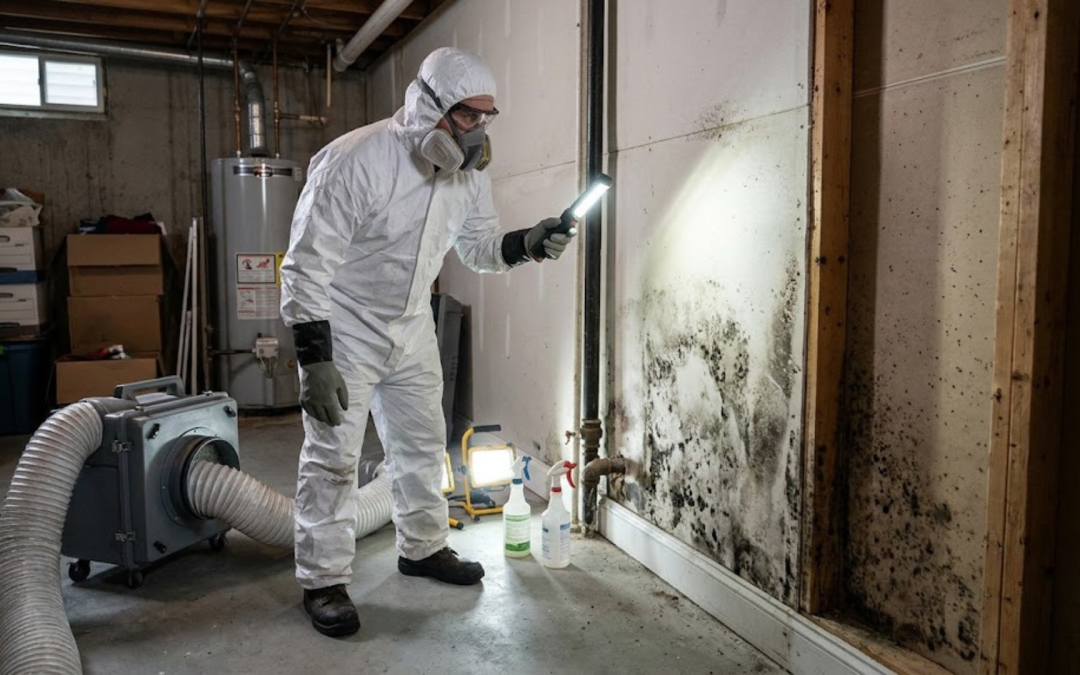
Certified technicians follow strict industry protocols to eliminate contamination safely. Typically, mold remediation in Union County, NJ follows six structured steps:
-
Comprehensive Mold Inspection and Testing: Specialists use infrared cameras, moisture meters, and air samplers to map hidden colonies.
-
Containment Setup: Crews seal affected rooms with heavy plastic sheeting and establish negative air pressure.
-
HEPA Air Filtration: Industrial air scrubbers run continuously to capture microscopic spores from the air.
-
Safe Material Removal: Technicians bag and remove contaminated drywall, carpeting, and wet insulation.
-
Antimicrobial Treatment and Drying: Experts apply EPA-registered solutions and operate commercial dehumidifiers to dry framing completely.
-
Clearance Verification: Final indoor air quality testing confirms your home meets safe environmental standards.
Cost of Mold Removal Services in Union County, NJ
Homeowners naturally want clear pricing before scheduling an inspection. Generally, mold remediation cost in NJ depends directly on contamination size and structural accessibility.
Average Price Ranges by Project Scope
Small, isolated containment projects in a single bathroom or closet usually cost between $500 and $1,500. Meanwhile, moderate basement mold removal in Union County ranges from $2,000 to $5,000. However, severe infestations spanning attics, crawlspaces, and HVAC systems can exceed $8,000.
Key Factors That Influence Remediation Pricing
Several on-site variables shape your final written estimate:
-
Total square footage of contaminated building materials.
-
Difficult access inside tight crawlspaces or high attic peaks.
-
Necessary HVAC ductwork sanitization and filter replacement.
-
Post-remediation drywall and flooring reconstruction needs.
Does Homeowners Insurance Cover Mold Removal in New Jersey?
Insurance coverage depends entirely on the original water source. Specifically, most New Jersey policies cover mold when a sudden, accidental event causes the moisture. For instance, a burst plumbing pipe or sudden appliance overflow usually qualifies for claim reimbursement.
On the other hand, insurers routinely deny claims caused by long-term neglect or unresolved foundation leaks. Therefore, you must document sudden water damage immediately with photos and call a licensed specialist right away.
How to Choose the Right Mold Remediation Company in Union County
Selecting a qualified contractor protects your investment and ensures permanent results. Look for these essential credentials before signing any contract:
-
IICRC Certification: Confirm technicians hold active certifications in applied microbial remediation.
-
Independent Testing Standards: Choose companies that support unbiased third-party air sampling.
-
Local NJ Licensing: Verify active New Jersey Home Improvement Contractor registration and full liability insurance.
-
Written Scope and Warranty: Demand transparent, itemized estimates backed by moisture-control guarantees.
Practical Ways to Prevent Mold From Returning After Remediation
Once professionals restore your home, smart moisture habits keep colonies away permanently. Implement these preventative steps across every floor:
-
Run Energy Star dehumidifiers to keep indoor humidity between 30% and 50%.
-
Clean gutters regularly and extend downspouts away from your foundation.
-
Operate bathroom and kitchen exhaust fans for 20 minutes after every use.
-
Insulate cold basement water pipes to stop summer condensation.
FAQS About Union County Mold Removal
How long does professional mold remediation take? Most residential projects take between one and five days. However, extensive water damage and structural drying require extra time.
Do I need to leave my house during mold removal? Usually, you can stay home safely because containment barriers isolate the work zone. Nevertheless, large whole-home projects may require temporary relocation.
Does bleach kill black mold permanently? No, bleach only removes surface color on porous wood and drywall. Because water in bleach feeds deeper roots, the growth quickly returns.
Protect your family and preserve your property value today. If you notice musty odors, water stains, or stubborn fungal growth, schedule a thorough inspection with trusted mold removal services in Union County right away.
Other Post:
Union County Mold Removal Company: Key Signs to Look for When Hiring
Professional Mold Removal vs. DIY Mold Cleaning: What Union County Homeowners Should Know
Basement Mold Removal in Union County: How to Stop Mold From Coming Back