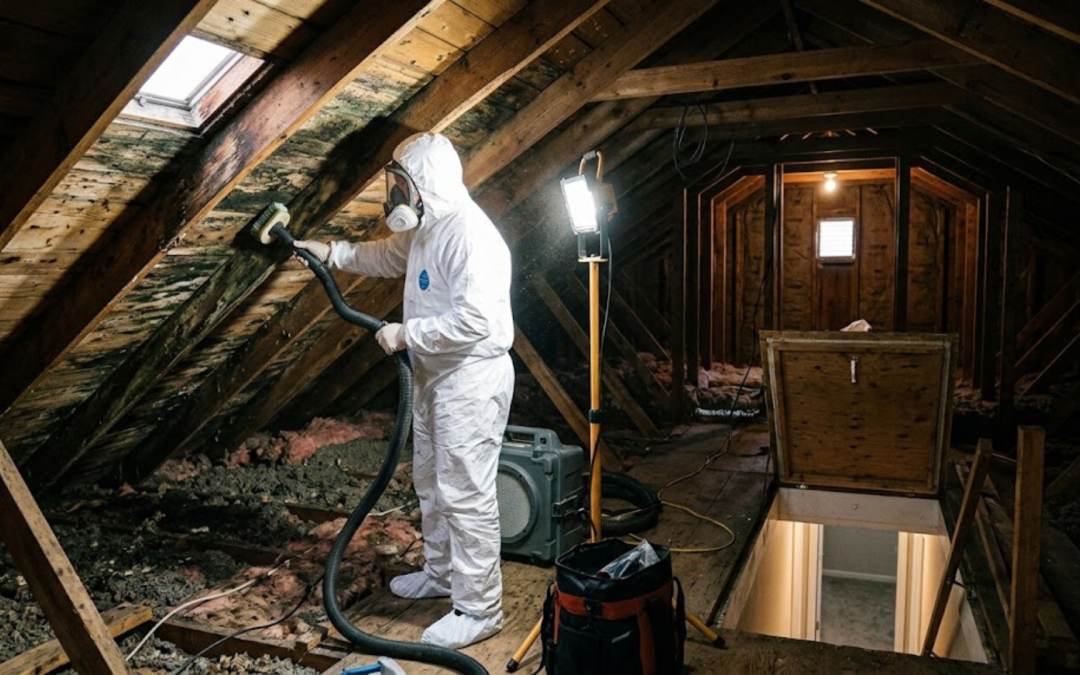
Attic mold can develop quietly, often remaining unnoticed until homeowners discover a musty smell, dark discoloration, or signs of moisture damage. In homes throughout Union County, NJ, changing temperatures, heavy rainfall, winter snow, roof leaks, and inadequate attic ventilation can create conditions where mold thrives. While a small amount of mold may seem harmless, ignoring the problem can allow it to spread and contribute to damage to building materials. Effective attic mold removal in Union County requires more than cleaning visible growth. Homeowners need to identify the source of moisture, remove affected materials when necessary, and take steps to prevent mold from returning.
What Causes Mold to Grow in Attics?
Mold needs moisture, an organic food source, and suitable environmental conditions to grow. Attics contain plenty of materials that can support mold, including wood framing, roof sheathing, insulation components, and other building materials. When moisture enters the attic and remains there, mold can develop relatively quickly.
Common causes of attic mold include:
- Roof leaks and damaged shingles
- Poor attic ventilation
- Excess indoor humidity
- Condensation on roof decking
- Plumbing leaks
- Improperly vented bathroom exhaust fans
- Inadequate or damaged insulation
- Water intrusion after storms
- Air leaks between the living space and attic
Common Warning Signs of Attic Mold
Attic mold isn’t always immediately visible. Homeowners should pay attention to changes in the attic and other parts of the home that could indicate a moisture problem.
Musty Odors
A persistent musty or earthy smell may indicate mold growth, particularly when the odor becomes stronger when entering the attic. Even if visible mold isn’t obvious, unusual odors can justify further inspection.
Dark Spots or Discoloration
Black, green, gray, or white patches on roof sheathing, rafters, insulation, or other surfaces may indicate mold growth. However, discoloration can have several causes, so professional assessment may be helpful before assuming that every dark mark is mold.
Water Stains and Damp Areas
Brown or yellow stains on wood and damp areas around roof penetrations can point toward water intrusion. Recurring moisture is particularly concerning because it can create favorable conditions for continued mold growth.
Wet or Damaged Insulation
Insulation that feels damp, appears compressed, or shows signs of water damage may indicate a roof leak, condensation, or another moisture issue. Heavily contaminated insulation may need to be removed and replaced.
Why Should You Not Ignore Attic Mold?
Ignoring mold can turn a relatively manageable problem into a more extensive remediation project. Continued moisture may contribute to deterioration of wood and other building materials while allowing mold to spread to additional areas. Mold can also create indoor air-quality concerns, particularly for people who are sensitive to mold or have allergies. The U.S. Environmental Protection Agency recommends controlling moisture and cleaning or removing moldy materials appropriately rather than simply covering affected surfaces. Most importantly, visible mold can be a symptom of a larger problem. A homeowner who discovers mold on attic sheathing may also have a roof leak, ventilation problem, condensation issue, or air-sealing deficiency that needs attention.
How Does Professional Attic Mold Inspection Work?
A professional attic mold inspection generally focuses on identifying both the extent of mold growth and the source of moisture. The process can vary depending on the property, but it commonly includes:
- Visual inspection: The attic is examined for visible mold, discoloration, moisture damage, and unusual odors.
- Moisture assessment: Areas showing signs of dampness are evaluated to help identify moisture sources.
- Roof inspection: Roofing components and potential entry points for water are checked.
- Ventilation evaluation: Professionals assess whether attic airflow is adequate.
- Insulation assessment: Insulation is examined for moisture damage or contamination.
- Remediation recommendations: Based on the findings, an appropriate cleanup and prevention plan can be developed.
What Is the Attic Mold Removal Process?
Professional mold removal in Union County NJ typically involves several steps rather than simply spraying a chemical over visible mold.
1. Identify the Moisture Source
The first priority is determining why the attic became damp. This could involve repairing a roof leak, improving ventilation, correcting an exhaust-venting problem, or addressing condensation.
2. Contain the Affected Area
When appropriate, professionals use containment practices to reduce the chance of spreading mold particles to unaffected areas during remediation.
3. Clean or Remove Contaminated Materials
Surfaces that can be safely cleaned may be treated using appropriate remediation methods. Materials that are extensively damaged or cannot be effectively restored may require removal.
4. Dry the Attic
Moisture must be properly controlled and affected areas thoroughly dried. Simply removing visible mold without eliminating moisture doesn’t address the underlying problem.
5. Prevent Future Growth
Once remediation is complete, homeowners should address ventilation, insulation, roof maintenance, and other contributing factors to reduce the likelihood of recurring mold.
DIY Attic Mold Removal vs. Professional Remediation
For a very small, isolated area, some homeowners may be able to perform basic cleanup using appropriate protective equipment and procedures. However, larger or recurring mold problems require greater caution.
| Situation | Recommended Approach |
|---|---|
| Small isolated mold area | Basic homeowner cleanup may be possible |
| Extensive mold growth | Consider professional remediation |
| Recurring attic mold | Investigate the underlying moisture source |
| Significant water damage | Professional assessment is recommended |
| Moldy insulation | Evaluate whether removal is necessary |
| Unknown source of moisture | Schedule an attic inspection |
| Possible HVAC contamination | Seek professional evaluation |
How to Prevent Attic Mold After Remediation
Preventing future mold growth starts with controlling moisture. Homeowners can reduce the risk by taking several practical steps:
- Repair roof leaks as soon as they are discovered.
- Keep gutters and downspouts clear and functional.
- Maintain adequate attic ventilation.
- Make sure bathroom exhaust fans vent outdoors.
- Monitor excessive indoor humidity.
- Check insulation for moisture damage.
- Seal appropriate air leaks between the home and attic.
- Inspect the attic after severe storms.
- Address condensation promptly.
- Schedule periodic roof and attic inspections.
When Should You Call a Mold Removal Professional?
Professional help may be appropriate when mold covers a significant area, keeps returning, follows extensive water damage, or occurs alongside an unidentified moisture problem. Homeowners should also consider professional assistance when contaminated insulation or building materials are involved. A professional can help determine the extent of the problem and develop a remediation strategy based on the property’s specific conditions.
Choose Professional Attic Mold Removal in Union County, NJ
Attic mold should never be treated as merely a cosmetic issue. Musty odors, dark discoloration, wet insulation, condensation, and water stains can all indicate an underlying moisture problem. Addressing these warning signs early can help limit damage and reduce the possibility of recurring mold. If you suspect mold in your attic, contact a trusted Union County mold removal professional for an inspection and appropriate remediation plan.