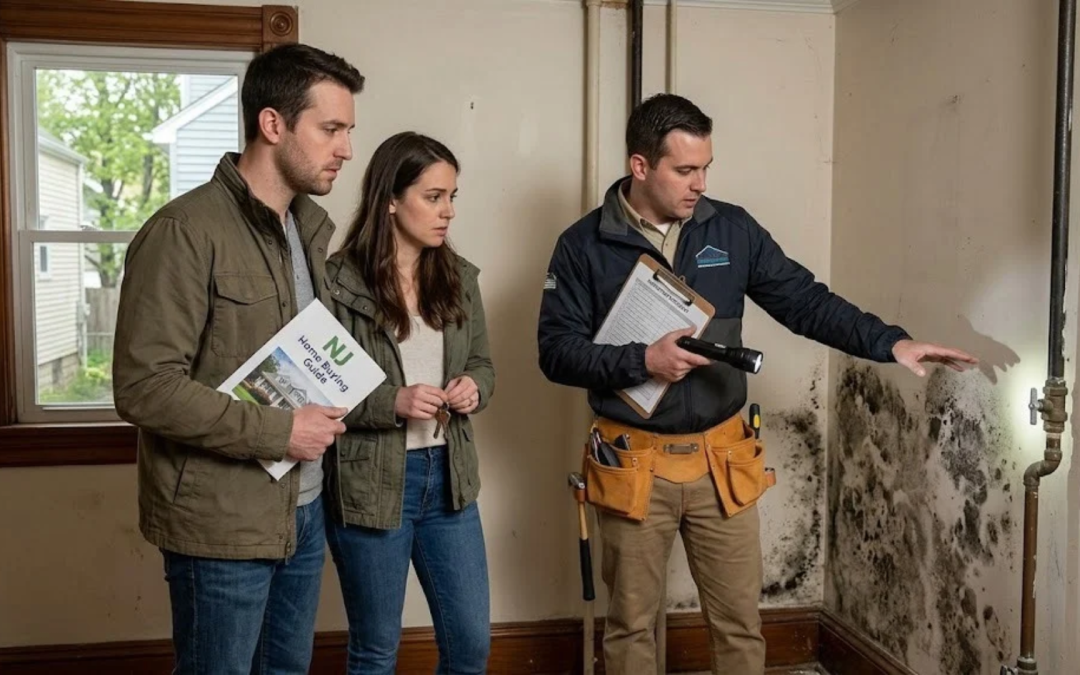
House hunting across the Garden State is notoriously competitive. Whether you are looking at a historic colonial in Bergen County, a 1960s split-level in Middlesex, or a cottage near the Jersey Shore, finding the right property requires patience. However, nothing halts a buyer’s excitement faster than stepping into an open house, heading down to the basement, and being greeted by a telltale musty odor or dark, discolored patches on the foundation walls.
Because of New Jersey’s humid summers, dense river valleys, and older housing stock, encountering mold during a home search is common. Finding fungal growth does not automatically mean you need to walk away from your dream home. With the right legal protections, diagnostic inspections, and negotiation strategy, mold is a manageable obstacle rather than an absolute dealbreaker.
Is It Safe to Buy a House With Mold?
The short answer depends entirely on the scope of the contamination, the species present, and the root cause behind it. Mold spores exist naturally everywhere in the outdoor environment, but when they find sustained moisture inside a closed structure, they colonize structural materials.
To gauge whether a property is safe to purchase, evaluate two primary considerations:
-
Health and Habitability Risks: Certain molds, including species of Aspergillus, Penicillium, and Stachybotrys chartarum (often dubbed “toxic black mold”), produce mycotoxins that trigger severe reactions. Vulnerable individuals, including young children, seniors, and anyone with asthma, allergies, or compromised immune systems, can experience persistent respiratory distress, chronic headaches, and skin irritation.
-
Structural Integrity: Mold feeds on organic cellulose found in drywall, wood studs, subflooring, and attic rafters. Prolonged fungal growth often indicates chronic wood rot, which can quietly compromise subfloors and load-bearing framing over time.
-
The Root Cause Rule: Mold is never the primary issue; it is a symptom of an uncontrolled water or humidity failure. If the underlying leak, grading defect, or condensation problem is resolved, the mold can be safely eradicated.
New Jersey Mold Disclosure Laws: What Sellers Must Reveal
New Jersey operates under consumer protection precedents that place real legal responsibility on home sellers. The standard New Jersey Seller’s Property Condition Disclosure Statement explicitly asks sellers whether they are aware of water intrusion, standing water, drainage problems, roof leaks, or past and present mold contamination.
If a seller knows about mold growth or has previously hired a remediation company, they are legally bound to disclose that history. Furthermore, listing a property “as-is” does not release a seller from these obligations. Under the New Jersey Consumer Fraud Act (CFA), intentionally concealing known latent material defects—such as fresh paint applied directly over active basement mold to hide water seepage—exposes sellers and their listing agents to substantial legal liability.
However, sellers are not legally required to test for problems they do not know exist. That makes thorough, independent buyer due diligence essential.
Common Mold Hotspots in New Jersey Homes
Different regions and architectural styles across New Jersey present distinct environmental challenges:
-
Sub-Grade Basements and Crawl Spaces (North & Central NJ): Along river basins like the Passaic and Raritan, high water tables create intense hydrostatic pressure against cinder block and poured concrete foundations. Failing sump pumps, undersized French drains, and uninsulated crawl spaces regularly lead to chronic basement humidity and fungal colonies.
-
Attic Sheathing and Rafters: In colder winter months, warm, humid air from kitchens and bathrooms frequently migrates into unconditioned attics. When bathroom exhaust fans terminate directly into the attic instead of ducting outside, moisture condenses against cold roof plywood, creating ideal conditions for black mold growth on attic sheathing.
-
Coastal Properties (Jersey Shore): Coastal homes face driving rain, salt spray, and extreme air moisture. Ground-level pilings, enclosed ground-floor storage enclosures, and unconditioned crawl spaces can trap ocean humidity, fueling rapid fungal development if ventilation is neglected.
Standard Home Inspection vs. Dedicated Mold Testing
During your due diligence period, relying solely on a standard residential home inspection can leave critical blind spots.
| Evaluation Factor | Standard NJ Home Inspection | Dedicated Environmental Mold Inspection |
| Primary Scope | Broad visual review of structural, mechanical, and electrical systems | In-depth microbial investigation focused on moisture and spore loads |
| Testing Methodology | Purely visual observations of accessible areas | Indoor/outdoor ambient air samples, surface swabs, and tape lifts |
| Diagnostic Equipment | Flashlight, basic outlet tester, standard moisture meter | Calibrated vacuum air pumps, thermal imaging cameras, wall-cavity probes |
| Laboratory Involvement | None; noted as “suspected microbial growth” | Samples analyzed by an accredited environmental microbiology lab |
| Average Cost in NJ | $450 – $750 (entire home survey) | $350 – $800+ (depending on total samples collected) |
| Key Deliverable | General repair list advising specialist consultation | Detailed lab report detailing spore counts per cubic meter and species IDs |
Estimated Mold Remediation Costs in New Jersey
Remediation pricing across New Jersey varies based on accessibility, containment requirements, and local disposal standards.
-
Attic Mold Remediation: Expect to pay between $2,000 and $4,500. Technicians generally use dry ice blasting, HEPA vacuuming, and antimicrobial sealing agents to clean exposed rafters and roof decking.
-
Basement or Crawl Space Remediation: Typically ranges from $1,500 to $6,000. If extensive drywall demolition or framing antimicrobial treatment is needed, costs can quickly climb.
-
HVAC System Decontamination: Running between $1,000 and $2,500, this process cleans ducts, coils, and air handlers if spores entered the central ventilation system.
-
Whole-House Severe Infestations: For properties left vacant, bank-owned, or flooded, comprehensive remediation often totals $8,000 to $20,000+.
Note: Remediation costs cover cleaning and removing the spores. Repairing exterior foundation cracks, replacing roofs, or installing interior perimeter French drains requires separate, additional investment.
Navigating Mold During the NJ Attorney Review and Inspection Window
New Jersey contracts typically allow an attorney review period followed by an agreed-upon home inspection window (usually 14 calendar days). If mold testing returns elevated indoor spore counts:
-
Notify Your Attorney Promptly: Have your real estate attorney draft a formal inspection demand letter citing the lab report.
-
Request Closing Credits Over Seller Repairs: Whenever possible, ask for a financial credit toward closing costs or an adjustment to the purchase price. When sellers manage remediation, they are financially incentivized to hire the cheapest contractor available. A credit allows you to choose and supervise a licensed, insured remediation specialist after closing.
-
Mandate Clearance Testing (PRV): If the seller insists on performing remediation before closing, ensure the contract addendum requires a passing Post-Remediation Verification (PRV) test. This clearance test must be performed by an independent environmental inspector, not the remediation crew that completed the cleanup.
-
Use Your Contingency if Negotiations Stall: If the seller refuses to remediate or credit the expense, your standard inspection contingency allows you to terminate the contract and recover your full earnest money deposit.
Mortgage and Financing Impacts
Financing a home with visible mold depends heavily on the loan program:
-
Conventional Loans: Appraisers focus mainly on market valuation. Minor surface mildew in an unfinished utility space might pass unnoticed, but widespread mold or evident water intrusion will be flagged, prompting the underwriter to require repairs before funding.
-
FHA and VA Loans: Government-backed mortgages enforce strict Minimum Property Requirements (MPRs). If an FHA appraiser observes visible mold or active water leaks, underwriting will halt loan approval until the hazard is completely remediated and re-inspected.
-
Renovation Loan Alternatives: If you are purchasing a distressed home where the seller refuses to fix the mold, consider converting your financing to an FHA 203(k) or Fannie Mae HomeStyle renovation mortgage, which wraps the repair and remediation costs directly into the primary purchase loan.
Maintaining a Mold-Free Home Post-Closing
Once the keys are yours, long-term mold control comes down to moisture management:
-
Maintain indoor relative humidity levels between 30% and 50% year-round by installing an auto-draining, high-capacity dehumidifier in the basement.
-
Direct all exterior gutters and downspout extensions at least 6 to 10 feet away from the foundation perimeter.
-
Ensure the surrounding yard slopes away from the house at a minimum 5% grade to prevent pooling water.
-
Verify that all bathroom and kitchen ventilation fans vent directly out through the exterior wall or roof, never into an attic cavity.