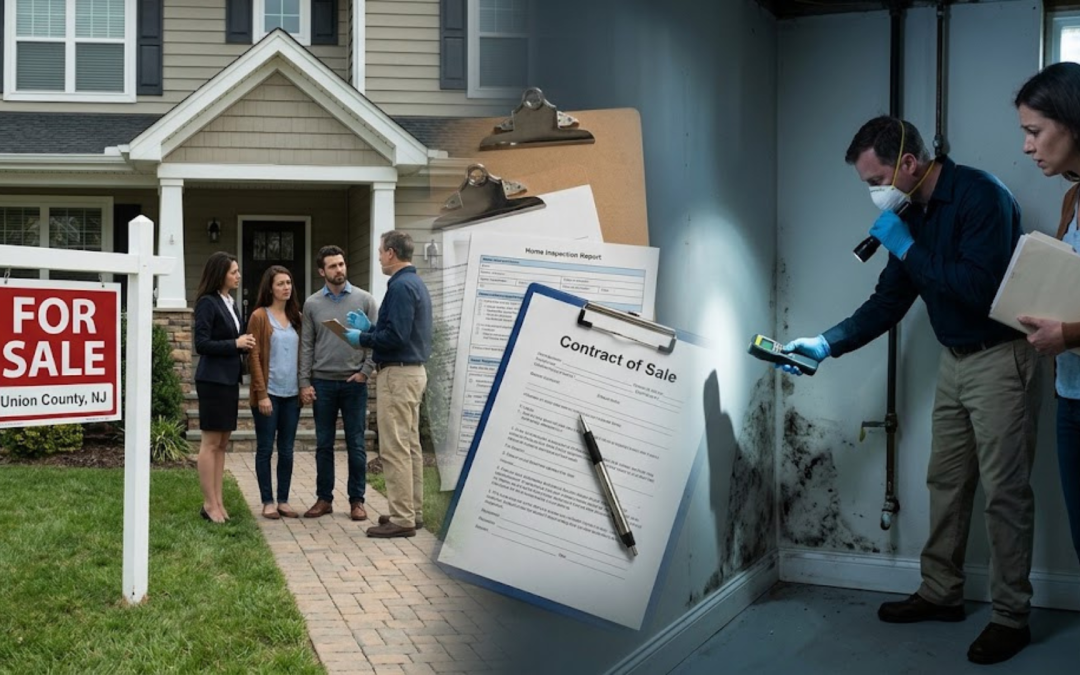
The Union County NJ real estate market moves fast. Buyers compete fiercely for homes in Westfield, Summit, Scotch Plains, and Cranford. However, hidden moisture and fungal growth can derail a closing overnight. Both buyers and sellers face serious financial risks when mold hides behind walls or under floorboards. Addressing mold problems first protects your investment and keeps your real estate transaction on track.
Why Union County Homes Are Uniquely Susceptible to Mold
New Jersey experiences humid summers, heavy rainstorms, and freezing winters. Consequently, local properties endure constant moisture fluctuations throughout the year. Furthermore, several regional factors increase the risk of mold growth across Union County:
-
Aging Housing Stock: Historic Colonials and Victorians in Elizabeth, Plainfield, and Westfield often feature older foundations and outdated ventilation systems.
-
High Water Tables: Heavy seasonal rain creates hydrostatic pressure, pushing groundwater into basements and crawl spaces.
-
Post-Storm Water Intrusion: Past severe storms and failing sump pumps frequently leave trapped moisture behind basement drywall and subflooring.
The Financial & Legal Stakes: How Mold Derails Real Estate Transactions
When an inspector discovers mold during attorney review, panic often follows. Buyers immediately demand steep price reductions or walk away from the deal entirely. Moreover, mortgage lenders regularly freeze loan approvals until licensed professionals resolve active water intrusion and fungal contamination.
“A standard home inspection isn’t a certified mold inspection. By the time a buyer spots visible spores, you already face aggressive renegotiations, lender holds, or a collapsed contract.”
Crucial Insights for Union County Home Sellers
Selling a house with mold in New Jersey requires careful legal and financial planning. Therefore, smart homeowners tackle moisture issues before putting a sign on the front lawn.
Navigating New Jersey’s Property Condition Disclosure Laws
New Jersey law requires sellers to complete the NJ Seller’s Property Condition Disclosure Statement honestly. Specifically, Questions 9 and 9a ask directly about basement dampness, water leakage, and known mold presence. If you hide a known material defect, buyers can sue you under the New Jersey Consumer Fraud Act. Full transparency protects you from costly post-closing lawsuits.
Pre-Listing Mold Remediation vs. Offering Buyer Credits
Fixing the problem before listing your home delivers a much stronger return on investment than offering buyer credits:
-
Preserves Your Asking Price: Buyers routinely overestimate cleanup costs and demand inflated discounts during negotiations.
-
Prevents Mortgage Delays: FHA, VA, and conventional underwriters require clearance certificates before releasing final funds.
-
Builds Immediate Buyer Trust: Providing transferable warranties and clean lab reports reassures nervous buyers and speeds up closing.
What Union County Home Buyers Need to Know Before Closing
Home buyers must look past fresh coats of basement paint and strong air fresheners. Otherwise, you risk inheriting an expensive environmental hazard right after moving day.
Red Flags to Watch for During Open Houses
Keep your eyes and nose alert when touring properties in Union County:
-
Musty, earthy odors lingering in basements, closets, or lower levels.
-
White, chalky mineral deposits (efflorescence) forming on cinderblock foundation walls.
-
Peeling paint, bubbling wallpaper, or warped wooden baseboards near exterior walls.
-
Multiple dehumidifiers running continuously in finished basements.
Why You Should Add a Dedicated Mold Inspection Contingency
General home inspectors perform visual checks only. Therefore, they often miss hidden colonies growing inside wall cavities. You should hire a certified mold inspector in Union County NJ during your inspection contingency window. Specialists use thermal imaging cameras, moisture meters, and air quality lab testing to uncover invisible problems before you finalize the purchase.
Buyer vs. Seller: Mold Responsibilities & Risks at a Glance
Understanding your specific role prevents costly surprises at the closing table. Compare how mold impacts both sides of the transaction below:
| Transaction Aspect | Home Seller Perspective | Home Buyer Perspective |
| Primary Goal | Protect home equity, avoid legal liability, and prevent closing delays. | Ensure a healthy living space and avoid surprise post-closing repair bills. |
| Legal Duty | Answer water and mold questions honestly on the NJ Seller’s Disclosure form. | Schedule specialized mold and air quality testing within the inspection window. |
| Financial Impact | Pre-listing remediation ($500–$6,000+) costs less than losing a qualified buyer. | Unchecked mold costs thousands out-of-pocket after closing if missed early. |
| Key Documents | Plumbing repair receipts, remediation scope of work, and clearance certificates. | Independent laboratory reports and transferable remediation warranties. |
Common Places Mold Hides in New Jersey Homes
Mold thrives in dark, damp, and poorly ventilated spaces. Check these five high-risk areas during your walkthrough:
-
Finished Basements: Moisture gets trapped behind wood paneling, under carpet padding, and along wooden rim joists.
-
Attics and Roof Sheathing: Bathroom exhaust fans venting into the attic—rather than outdoors—create condensation and dark fungal staining.
-
Crawl Spaces: Unsealed dirt floors allow ground moisture to evaporate directly into wooden floor joists year-round.
-
Behind Bathrooms and Kitchens: Slow pinhole plumbing leaks soak drywall behind shower surrounds and under kitchen cabinets.
-
HVAC Ductwork and Drip Pans: Clogged condensate lines circulate microscopic spores throughout every room in the house.
Understanding the Mold Inspection and Remediation Process
Knowing how professionals handle mold removes fear from the transaction. Always hire an independent tester rather than a company that also sells remediation, as this prevents conflicts of interest.
-
Visual Assessment and Moisture Mapping: Inspectors locate the exact water source using infrared cameras and digital moisture meters.
-
Air Quality and Surface Sampling: Technicians collect indoor and outdoor control samples for accredited laboratory analysis.
-
Containment and HEPA Filtration: Crews seal off affected rooms using plastic sheeting and negative air machines to trap airborne spores.
-
Source Repair and Material Removal: Contractors fix the underlying leak and safely discard contaminated drywall, carpet, or insulation.
-
Post-Remediation Clearance Testing: An independent inspector verifies that indoor spore counts have returned to normal, healthy levels.
Health Risks & Indoor Air Quality: Beyond Property Value
Mold affects far more than your home’s resale value; it directly threatens your family’s health. Prolonged exposure to elevated spores—such as Aspergillus, Penicillium, and Stachybotrys—triggers severe allergies, asthma attacks, chronic sinus congestion, and persistent fatigue. Consequently, clean indoor air quality remains a top priority for families relocating to Union County.
FAQS About Mold in Union County Real Estate
Does New Jersey law require sellers to test for mold before selling?
No, New Jersey law does not force homeowners to conduct pre-listing mold tests. However, state law strictly requires sellers to disclose any known water intrusion or active mold growth on the disclosure form.
How much does mold remediation cost in Union County, NJ?
Most residential mold remediation projects in Union County cost between $500 and $6,000. Severe structural contamination or attic-wide removal can cost more, while independent testing typically adds $450 to $800.
Can I get a mortgage on a house with active mold?
Most mortgage lenders will not approve a loan on a home with active water leaks or visible mold. Underwriters require proof of professional remediation and clearance testing before funding the loan.
Will homeowners insurance cover mold removal during a home sale?
Standard homeowners insurance only covers mold if a sudden, covered peril—like a burst pipe—caused the water damage. Policies exclude mold resulting from chronic humidity, poor maintenance, or groundwater flooding.
Final Steps: Protecting Your Union County Real Estate Investment
Whether you are listing a classic colonial in Westfield or buying your first home in Cranford, moisture control puts you in command of the negotiation table. Proactive sellers protect their equity and close faster without last-minute surprises. Meanwhile, diligent buyers secure a safe, healthy home for their families. Schedule a certified, independent mold inspection in Union County before signing your final contract, and move forward with total confidence.
Other Post:
Mold Removal Services in Union County: When Should You Call a Professional?
Mold Removal in Fanwood: How Moisture Problems Lead to Mold Growth
Do You Need Mold Remediation After Water Damage?