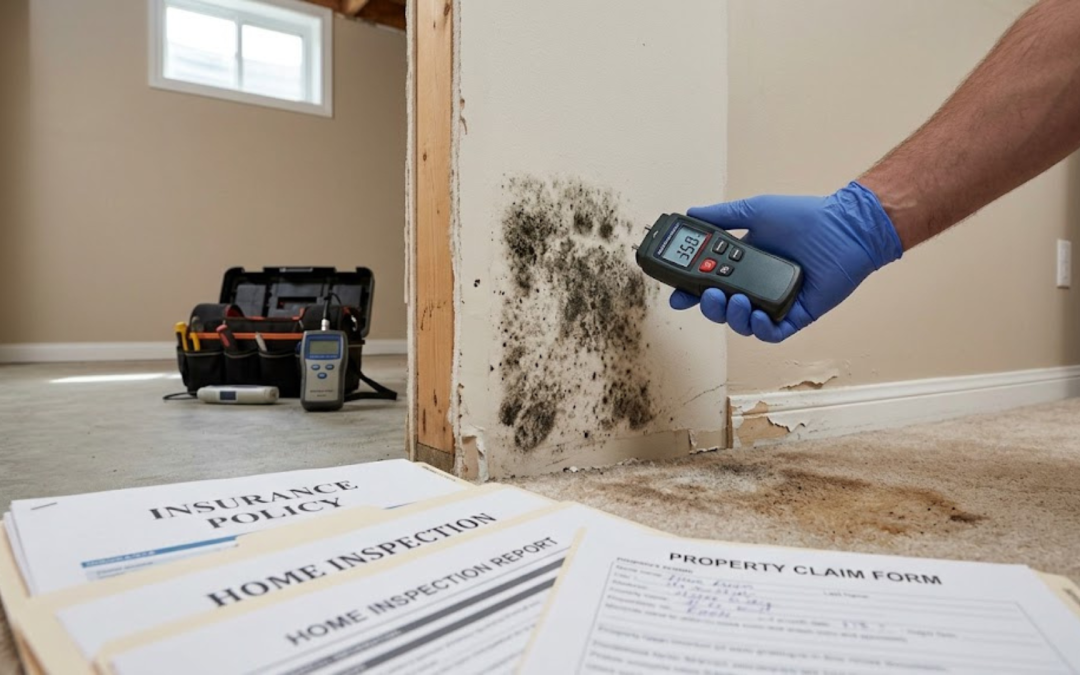
Finding mold inside your home is distressing, whether you are dealing with a historic Colonial in Plainfield, a split-level near the Rahway River basin in Cranford, or a condo in Elizabeth. Beyond the obvious health concerns, mold remediation often carries an intimidating price tag. If you are wondering whether your homeowners insurance policy will foot the bill for mold remediation in Union County, New Jersey, the short answer is: it depends entirely on what caused the moisture. Standard homeowners insurance policies generally exclude mold cleanup unless the growth directly stems from a sudden and accidental covered peril. Let’s break down how insurance companies handle mold claims in New Jersey, how policy limits work, and the exact steps to take if you need to file a claim.
Covered Perils vs. Exclusions: When Insurance Pays (and When It Won’t)
Insurance carriers draw a strict line between catastrophic, unforeseen accidents and ongoing maintenance neglect. The table below outlines common mold scenarios and how carriers typically rule on them.
| Damage Scenario / Root Cause | Likely Covered? | Why Policy Responds or Denies |
| Sudden Pipe Burst / Appliance Rupture | Yes (Subject to limits) | Considered a sudden, accidental covered peril; the moisture event was immediate and unforeseen. |
| Storm-Damaged Roof or Siding Tear | Yes | Wind and falling branches that puncture a roof are standard covered perils in NJ policies. |
| Rahway River or Surface Water Flooding | No | Standard homeowners insurance strictly excludes surface flooding; requires a separate FEMA/NFIP policy. |
| Slow, Gradual Plumbing Leak | No | Classed as gradual deterioration and routine homeowner maintenance neglect. |
| Basement Humidity / Poor Ventilation | No | Ambient seasonal condensation is considered a continuous, preventable upkeep issue. |
| Sewer or Sump Pump Backup | Conditional | Only covered if you previously added an optional Water Backup endorsement to your policy. |
Understanding New Jersey Policy Caps & Mold Endorsement Riders
Even when your claim is approved because of a sudden covered peril (such as a frozen pipe bursting during a hard January freeze), standard New Jersey policies rarely offer unlimited coverage for mold removal.
Most standard HO-3 (Special Form) and HO-5 (Comprehensive Form) policies include an explicit sub-limit or cap on fungi, wet rot, dry rot, and bacteria remediation. In New Jersey, this payout cap typically lands between $2,500 and $10,000. Because professional mold remediation in the Tri-State area regularly exceeds $5,000 due to regional labor and disposal regulations, a basic cap can leave property owners paying significant out-of-pocket expenses.
To protect against this gap, many Union County homeowners purchase an optional Mold and Fungi Endorsement (Rider). Adding this endorsement expands your coverage ceiling to $25,000 or $50,000, which covers both containment procedures and structural drying after an approved water loss.
Union County-Specific Mold Risks: Flooding, Older Homes, and Local Climate
Union County presents a unique intersection of aging architecture, dense river systems, and humid subtropical summers that make mold a persistent challenge.
-
River Basins and Low-Lying Zones: Towns situated along the Rahway River, Elizabeth River, and Robinson’s Branch—notably Cranford, Rahway, Linden, and Scotch Plains—face routine high water tables and severe weather runoff. When severe storms push floodwaters into basements, resulting mold is categorized as flood damage rather than storm damage. Unless you have active National Flood Insurance Program (NFIP) coverage, standard insurance will deny the claim entirely.
-
Historic and Century-Old Housing: Many neighborhoods in Summit, Westfield, and Plainfield feature homes built before 1950. These properties often retain original cast-iron plumbing, uninsulated exterior walls, and porous stone or mortar foundations. Insurance adjusters inspect these older structures aggressively; if they find pre-existing rust on a fitting, they will argue that the leak was gradual rather than sudden.
Step-by-Step: How to File a Mold Insurance Claim in Union County
Filing an insurance claim for mold requires meticulous timing and documentation. Follow these steps to maximize your chances of approval:
-
Stop the Moisture Source Immediately: Shut off the main water valve if a pipe burst. Insurance contracts require you to take reasonable action to mitigate ongoing damage.
-
Document the Damage Thoroughly: Take date-stamped photos and video of standing water, the origin of the break, and all visible mold colonies before running fans or moving personal items.
-
Notify Your Carrier Promptly: Contact your insurance agent within 24 to 48 hours. Failing to report an underlying water leak promptly gives adjusters grounds to classify the subsequent mold growth as neglect.
-
Hire an Independent IICRC-Certified Inspector: Do not rely exclusively on the adjuster’s assessment. An independent indoor air quality test and infrared moisture scan provide unbiased proof of the loss scope.
-
Itemize Remediation vs. Repairs: Keep all invoices separated. Your carrier may account for drywall removal and antimicrobial treatments under your mold sub-limit, while categorizing plumbing repairs under your broader dwelling limit.
The Average Cost of Professional Mold Remediation in Union County, NJ
Professional remediation involves containment, HEPA air scrubbers, physical removal of contaminated porous materials, and chemical antimicrobial treatments. Typical costs in Union County break down into three tiers:
-
Minor Isolated Remediation ($500 – $1,500): Contained growth limited to an area under 10 square feet, such as beneath a bathroom vanity or inside a single closet wall cavity.
-
Moderate Basement or Attic Remediation ($2,500 – $6,000): Typical for flooded finished basements or poorly ventilated attics where subfloors, insulation, and lower drywall sections must be removed and scrubbed.
-
Severe Structural Remediation ($7,000 – $15,000+): Full-scale toxic black mold (Stachybotrys) remediation involving multi-room negative-air containment barriers, HVAC duct cleaning, subfloor replacement, and extensive clearance testing.
4 Critical Red Flags That Lead to Denied Mold Claims
Insurers scrutinize mold claims heavily. Adjusters look specifically for conditions that allow them to reject liability under standard exclusion clauses:
-
Visible Dry Rot and Long-Term Water Staining: Rusted nails, rotted studs, or thick rings around pipe penetrations signal that moisture existed long before the reported event.
-
Failure to Mitigate Promptly: Waiting five days after a dishwasher leak to contact a remediation company lets mold spores proliferate, giving carriers a clear reason to void coverage.
-
Absence of an Accidental Trigger: Submitting a claim for attic mold without identifying a missing shingle, damaged flashing, or cracked pipe will result in an immediate denial.
-
Foundation Seepage: Water weeping through porous fieldstone basement walls during heavy spring rains is classified as groundwater seepage, which is excluded from standard policies.
Local Remediation Protocols & Union County Municipal Permitting
Remediating mold in New Jersey often crosses the threshold from simple cleaning into major structural alteration.
When Is a Building Permit Required?
If mold remediation requires cutting into load-bearing wall studs, removing subflooring down to the joists, or replacing compromised electrical wiring inside wet walls, your local municipal building department (such as in Elizabeth, Union Township, or Linden) will require a construction or demolition permit. Always confirm that your contractor pulls necessary local permits, as unpermitted structural work can void policy coverage or complicate future home sales.
The Value of Post-Remediation Clearance Testing
Never sign off on an insurance claim until a third-party environmental testing firm performs a post-remediation verification (PRV) test. This test verifies that airborne spore counts have returned to normal baseline levels and provides an official Certificate of Clearance—essential documentation when selling your home in New Jersey’s competitive real estate market.
What to Do If Your Insurance Carrier Denies Your Mold Claim
If your claim is wrongfully denied, you do not have to accept the adjuster’s initial ruling as final.
-
Request a Written Denial Letter: Review the exact policy language cited by the adjuster (e.g., Section I – Exclusions, Wear and Tear).
-
Hire a Licensed NJ Public Adjuster: A state-licensed public adjuster works on your behalf, re-evaluating the physical evidence and negotiating directly with the carrier’s team.
-
File a Regulatory Grievance: If an insurer delays, misrepresents terms, or acts in bad faith, file a formal complaint with the New Jersey Department of Banking and Insurance (DOBI) to trigger a state review of the handling of your claim.