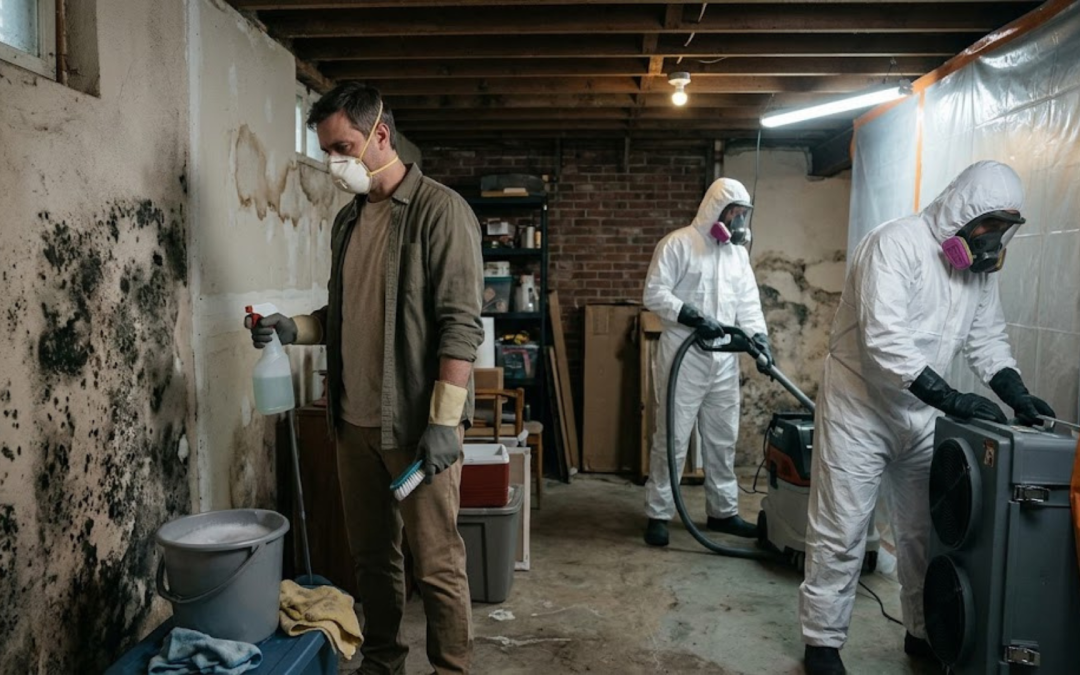
Discovering dark, patchy growth along a baseboard or smelling a damp, earthy odor in your basement is one of the most unsettling experiences for any Springfield homeowner. In our region, seasonal weather swings—from muggy summer heat waves to wet, freeze-thaw spring transitions—create prime breeding grounds for indoor fungal growth. When faced with this issue, the instinctive reaction is often to grab rubber gloves, a scrub brush, and a bottle of household bleach. While taking immediate action feels proactive, wiping visible discoloration from drywall or tile addresses only a fraction of the problem. Mold is not just a surface cosmetic nuisance; it is an active biological organism whose root structures penetrate deep into building materials. Relying solely on do-it-yourself fixes often leads to recurring infestations, hidden structural rot, and compromised indoor air quality.
The Realities of Mold Growth in Springfield Homes
Springfield residences—ranging from historic properties with original stone foundations to modern slab builds—face recurring moisture vulnerabilities. Fungal spores naturally exist outdoors, but they require only three elements to establish an indoor colony: organic food material (such as drywall paper, wood framing, or carpet backing), optimal temperatures, and persistent moisture. Whenever relative indoor humidity climbs above 55%, dormant spores activate within 24 to 48 hours.
Local crawl spaces, poorly ventilated basements, and unsealed attics act as primary reservoirs for moisture accumulation. During humid regional summers, warm air enters subfloor vents, condenses against cooler ductwork and foundation walls, and saturates floor joists. Because most homeowners rarely inspect these dark, confined zones, colonies of common household molds such as Cladosporium, Penicillium, Aspergillus, and toxic black mold (Stachybotrys chartarum) often thrive undisturbed for months before surface signs appear inside living areas.
Where DIY Mold Cleaning Falls Short
While store-bought biocides and home remedies are widely advertised online, their real-world application on porous building materials consistently falls short:
-
The Bleach Dilution Paradox: Chlorine bleach is chemically formulated to sanitize non-porous surfaces like glazed tile and porcelain. When applied to porous drywall or unsealed lumber, the chlorine evaporates rapidly on the surface, while the water carrier sinks deep into the material, inadvertently feeding the fungal root system (hyphae).
-
Aerosolization and Cross-Contamination: Scrubbing dry or damp fungal colonies without negative air containment dislodges millions of microscopic spores into the surrounding room. These airborne particles are sucked into your central HVAC return ducts and distributed throughout bedrooms and common areas.
-
Masking the Root Moisture Source: Wiping away a black spot does not stop foundation seepage, roof decking leaks, or hairline plumbing drips behind wall cavities. As long as the underlying moisture intrusion remains unaddressed, the colony will re-emerge within days.
-
Inadequate Personal Protection: Standard dust masks and paper respirators do not block fine fungal particulates or volatile organic compounds (VOCs) released during agitation, leaving the homeowner vulnerable to acute inhalation exposure.
5 Critical Signs It’s Time to Call Springfield Specialists
If you notice any of the following indicators, the contamination has moved beyond safe self-treatment thresholds and demands certified intervention:
-
The 10-Square-Foot Threshold: Guidelines set by the U.S. Environmental Protection Agency (EPA) establish that any contiguous fungal growth exceeding 10 square feet (roughly a 3-by-3-foot area) requires professional-grade containment protocols.
-
Pervasive, Unexplained Musty Odors: If a room smells damp despite thorough housecleaning and running normal fans, fungal colonies are likely actively off-gassing behind drywall, beneath floorboards, or inside duct insulation.
-
Recurring Physical Symptoms: Family members experiencing unexplained morning congestion, persistent coughing, eye irritation, or sudden asthma flare-ups that improve when leaving the house often indicate high concentrations of airborne mycotoxins.
-
History of Water Intrusion or Flooding: If your basement took on water during a heavy storm or a supply line burst while you were away, structural framing saturated for more than 48 hours almost always harbors concealed mold growth.
-
Soft, Warped, or Discolored Surfaces: Squishy baseboards, peeling paint, or bubbling wallpaper signify that moisture has compromised the core structural integrity of the substrate.
DIY Cleaning vs. Certified Professional Remediation
| Evaluation Factor | DIY Surface Cleaning | Certified Professional Remediation |
| Typical Target Scope | Non-porous surfaces under 10 sq. ft. | Structural framing, crawl spaces, HVAC, and large areas |
| Spore Containment | None; open-room agitation spreads spores | 6-mil poly containment zones with negative air machines |
| Air Filtration Standards | Standard household vacuums (re-exhausts spores) | Industrial HEPA air scrubbers capturing down to 0.3 microns |
| Moisture Diagnostics | Visual inspection and guesswork | Infrared thermal imaging and non-invasive moisture meters |
| Substrate Treatment | Surface bleaching (leaves hyphae intact) | EPA-registered botanical/antimicrobial biocides and HEPA sanding |
| Quality Verification | Visual check only | Post-Remediation Verification (PRV) third-party air clearance |
The Anatomy of a Professional Remediation Process
True mold abatement follows strict scientific standards established by the Institute of Inspection, Cleaning and Restoration Certification (IICRC S520 standard). Certified technicians execute remediation across four methodical phases:
Phase 1: Inspection & Thermal Moisture Mapping
Technicians avoid indiscriminate demolition by using calibrated pin-type moisture meters and thermal imaging cameras. These tools detect hidden temperature differentials behind walls, pinpointing trapped water leaks and the exact boundaries of concealed microbial colonies.
Phase 2: Containment & Negative Air Pressure
To safeguard your living environment, the crew isolates the affected workspace using heavy polyethylene sheeting and zippered access chambers. High-volume negative air machines exhaust air to the outdoors through sealed duct runs, ensuring that airborne spores dislodged during work cannot migrate to unaffected rooms.
Phase 3: HEPA Filtration & Controlled Material Removal
Compromised porous materials—such as saturated insulation and degraded drywall—are carefully cut out, bagged in sealed hazmat containers, and removed. Non-porous and semi-porous structural studs undergo specialized HEPA vacuuming, mechanical wire brushing, and treatment with EPA-registered commercial antimicrobials.
Phase 4: Structural Drying & Post-Clearance Verification
Industrial low-grain refrigerant (LGR) dehumidifiers extract deeply bound moisture from framing timbers until moisture readings drop below safe structural thresholds (typically under 15%). Finally, independent air samples verify that indoor airborne spore counts match or fall below normal outdoor baseline levels before containment is removed.
Health & Structural Hazards of Incomplete Mold Removal
Leaving mold colonies partially treated inside wall voids or floor assemblies introduces long-term health hazards. Mold colonies produce microscopic metabolites called mycotoxins, which circulate continuously through residential forced-air systems. Chronic exposure is especially dangerous for young children, elderly family members, and individuals with compromised immune systems, frequently triggering chronic sinusitis, severe allergic reactions, and recurring bronchitis.
Beyond physical wellness, mold poses a direct threat to property value and structural integrity. Fungi derive their nutrients by breaking down cellulose—the primary structural component of wood framing, floor joists, and subfloors. Left unchecked, fungal colonies steadily decay structural timber, resulting in sagging floors, compromised support beams, and structural repairs that far exceed the cost of timely professional remediation.
What to Expect for Mold Remediation Costs in Springfield
Remediation pricing varies depending on accessibility, severity, and the amount of structural material requiring disposal:
-
Minor, Localized Containment (Small Bathroom or Pantry): $600 – $1,500
-
Basement or Crawl Space Encapsulation/Remediation: $1,800 – $5,000
-
Extensive Structural & Whole-Home HVAC Remediation: $5,500 – $10,000+
Coverage for remediation often hinges on the source of the moisture. Standard homeowner insurance policies generally cover mold remediation if it directly stems from a sudden, accidental covered peril—such as a ruptured hot water heater or a burst supply line. However, if the mold results from deferred maintenance, long-term groundwater seepage, or elevated ambient humidity, remediation costs are typically the owner’s responsibility.
Long-Term Prevention: Keeping Your Springfield Home Dry
Once your home has been remediated, maintaining a dry environment prevents future spore activation:
-
Regulate Indoor Relative Humidity: Keep basement and living-area humidity levels between 30% and 50% year-round using automatic dehumidifiers.
-
Encapsulate Vulnerable Crawl Spaces: Cover exposed dirt crawl space floors with durable, puncture-resistant vapor barriers and seal perimeter foundation vents.
-
Manage Exterior Ground Runoff: Clean gutters regularly and position downspout extensions at least 6 to 8 feet away from foundation walls to prevent basement water pooling.
-
Ensure Direct Exterior Ventilation: Verify that high-moisture appliances, including bathroom exhaust fans and clothes dryers, vent completely to the outdoors rather than terminating inside an attic or wall cavity.
Finding the Right Springfield Mold Remediation Contractor
When selecting a contractor to restore your home, prioritize expertise over quick-fix promises. Look for companies whose technicians hold active IICRC certifications in Applied Microbial Remediation (AMRT) and carry specialized environmental pollution liability insurance. A reputable contractor will provide transparent, itemized remediation estimates, clearly identify the underlying moisture driver, and welcome independent third-party air clearance testing to ensure your home is certified clean, safe, and dry. Taking prompt, professional action eliminates recurring moisture headaches and preserves the long-term structural value of your property.
Other Post:
How Long Does Professional Mold Remediation Take? A Complete Guide for Union County Homeowners
Black Mold Removal in Union County: When Is Professional Remediation Necessary?
Professional Mold Removal vs. DIY Mold Cleaning: What Union County Homeowners Should Know