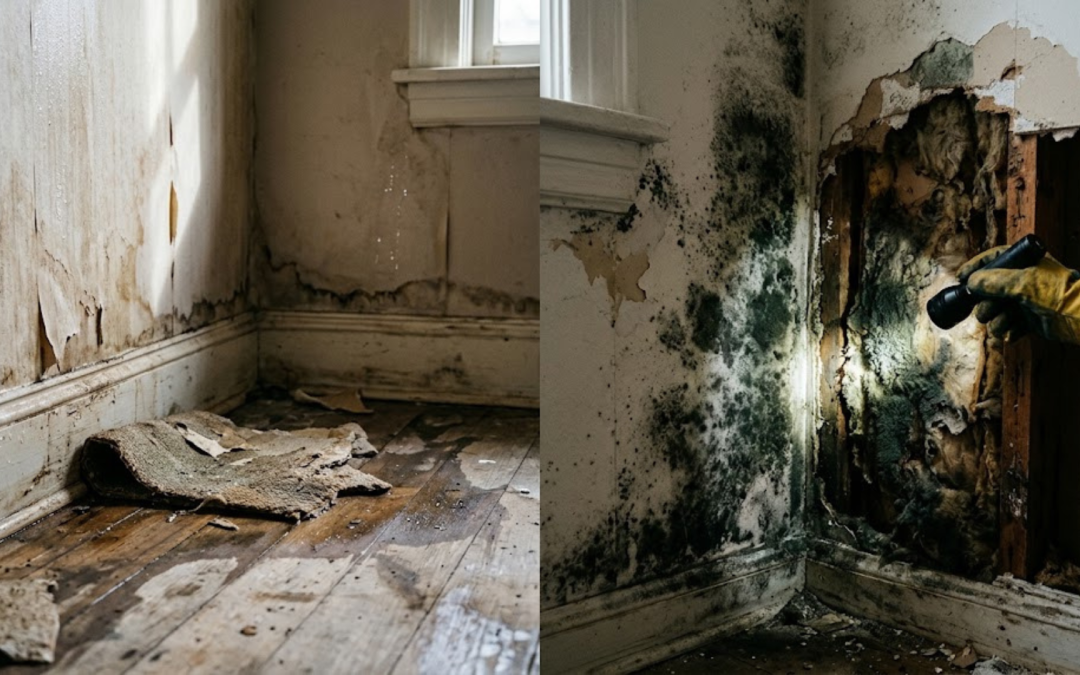
Yes, you often need professional mold remediation after water damage. Water quickly penetrates porous building materials like drywall, wood, and carpet. When moisture stays trapped for more than 24 to 48 hours, dormant fungal spores wake up and multiply rapidly. Consequently, delaying cleanup can lead to severe structural decay and serious indoor health hazards.
The 24-to-48-Hour Window: How Quickly Does Mold Grow?
Mold spores float naturally through indoor and outdoor air. Under normal conditions, these spores remain dormant and harmless. However, standing water changes everything.
Once moisture saturates building materials, spores begin to germinate within 24 to 48 hours. Mold feeds eagerly on organic matter such as cellulose in drywall and wood studs. Furthermore, warm indoor temperatures accelerate this destructive growth cycle. If you do not completely extract water and dry your home within two days, mold colonies will establish deep roots inside your walls and floors.
Water Damage vs. Mold Remediation: Key Differences
Many property owners confuse basic water mitigation with full mold remediation. Therefore, you must understand their distinct roles.
Water damage mitigation focuses on immediate water removal and structural drying. Technicians pump out standing liquid, set up dehumidifiers, and salvage dry items.
In contrast, mold remediation treats an active biological contamination. Certified specialists isolate the contaminated zone to stop spore migration. Afterward, they safely tear out infested porous materials and apply EPA-registered antimicrobial agents. Thus, basic water drying saves structures, while mold remediation purifies the indoor environment.
Tell-Tale Signs You Need Mold Remediation
Mold often hides out of sight behind baseboards and under floorboards. Look for these warning signs immediately after a water leak:
Visual Clues
-
Dark Spots: Black, brown, or green patches spreading across drywall or ceilings.
-
Surface Textures: Fuzzy, velvety, or powdery textures on window sills and framing.
-
Structural Warping: Bubbling paint, peeling wallpaper, and warped floorboards that trap dampness.
Environmental Clues
-
Persistent Odors: An earthy, sour smell that lingers even after surfaces look dry.
-
Condensation: Excessive fogging on window panes and damp patches on cold walls.
-
HVAC Dust: Dark residue collecting around air vent grilles.
Health Clues
-
Respiratory Issues: Sudden coughing, wheezing, or tightness in the chest.
-
Allergy Flare-Ups: Watery eyes, running noses, and itchy skin inside the building.
-
Frequent Headaches: Unexplained fatigue or headaches that vanish when you leave home.
DIY Cleanup vs. Professional Remediation
Can you handle the cleanup yourself, or should you hire certified experts? The following comparison table highlights key criteria:
| Feature / Criteria | Safe for DIY Cleanup | Requires Professional Remediation |
| Contaminated Area | Under 10 square feet | Exceeds 10 square feet |
| Water Source | Clean tap water (Category 1) | Grey water or sewage (Categories 2 & 3) |
| Drying Timeline | Completely dry in under 24 hours | Wet for more than 48 hours |
| Affected Materials | Non-porous tile, metal, or vinyl | Porous drywall, subfloors, and carpets |
| Air System Status | Ducts remain clean and dry | Mold spores infiltrate the HVAC vents |
| Protective Gear | Basic dust mask and rubber gloves | Commercial negative air units and full PPE |
Categorizing Water Damage: Why the Source Dictates Mold Risk
The type of water in your home directly influences how fast harmful microbes grow. Restoration professionals classify water into three distinct categories:
-
Category 1 (Clean Water): This water originates from clean supply pipes, overflowing sinks, or rainwater. While it carries minimal biological danger initially, it can still trigger mold within 48 hours if left unaddressed.
-
Category 2 (Grey Water): This water flows from washing machines, dishwashers, or sump pumps. Because it contains detergents and organic residues, it feeds fungal blooms much faster than clean water.
-
Category 3 (Black Water): This category includes sewage backups, river floods, and rising groundwaters. It carries deadly bacteria and toxic fungi. As a result, you must always call licensed remediators to handle Category 3 water.
The Step-by-Step Professional Remediation Process
Professional remediators follow standardized protocols to restore indoor air quality safely:
1. Inspection and Moisture Mapping
Technicians use infrared thermal cameras and moisture meters. They scan walls to locate hidden water pockets without breaking structures open.
2. Negative Air Containment
Crews erect heavy plastic containment barriers around the affected zone. Meanwhile, they install industrial negative air machines to prevent loose spores from drifting into clean rooms.
3. Air Scrubbing and Material Removal
Technicians run commercial HEPA scrubbers to filter microscopic spores out of the air. Concurrently, they bag up saturated drywall, insulation, and carpet for safe disposal.
4. Sanitization and Reconstruction
Finally, crews apply hospital-grade fungicides across all exposed framing studs. Once all wood tests dry, contractors rebuild the room with fresh materials.
Estimated Mold Remediation Costs
Remediation costs vary widely based on the scale of the damage. For minor basement or bathroom patches, homeowners typically pay between $1,500 and $3,500. However, extensive structural remediation throughout crawl spaces, wall cavities, and air ducts can exceed $7,000.
Additionally, you should review your homeowner’s insurance policy carefully. Most insurers cover mold remediation if a sudden, accidental plumbing rupture caused the issue. On the other hand, insurers routinely reject claims when neglect or deferred maintenance caused the leak.
5 Proactive Steps to Prevent Mold After an Active Leak
Act immediately when a plumbing pipe bursts or an appliance leaks:
-
Shut Off the Main Valve: Turn off the primary water shut-off valve to stop the incoming flow.
-
Remove Standing Water: Use wet-dry vacuums, buckets, and mops to pull liquid off the floor.
-
Deploy Dehumidifiers: Run commercial-grade dehumidifiers continuously to pull indoor humidity below 50 percent.
-
Discard Saturated Items: Throw away wet cardboard, soggy rugs, and wet cushions right away.
-
Circulate Dry Air: Point high-velocity air movers directly toward damp walls and floorboards.
Frequently Asked Questions
Can mold grow behind drywall after water damage?
Yes, mold thrives on the untreated paper backing of drywall. Trapped dark spaces and lingering moisture create perfect breeding grounds within wall cavities.
Will running a standard fan stop mold growth?
No, standard household fans cannot dry deep structural wood. In fact, standard fans blow loose fungal spores around your home and spread the contamination.
How long does the remediation process take?
Most professional remediation projects take between two and five days. The timeline depends directly on the moisture level and the size of the room.
Other Post:
Professional Mold Remediation in Springfield: When DIY Isn’t Enough
How Much Does Mold Remediation Cost in Union County, NJ?
Best Union County Mold Remediation Service: What to Look For